The Future of Abacus (Soroban): Why This Ancient Tool is the Ultimate 2026 Tech Skill
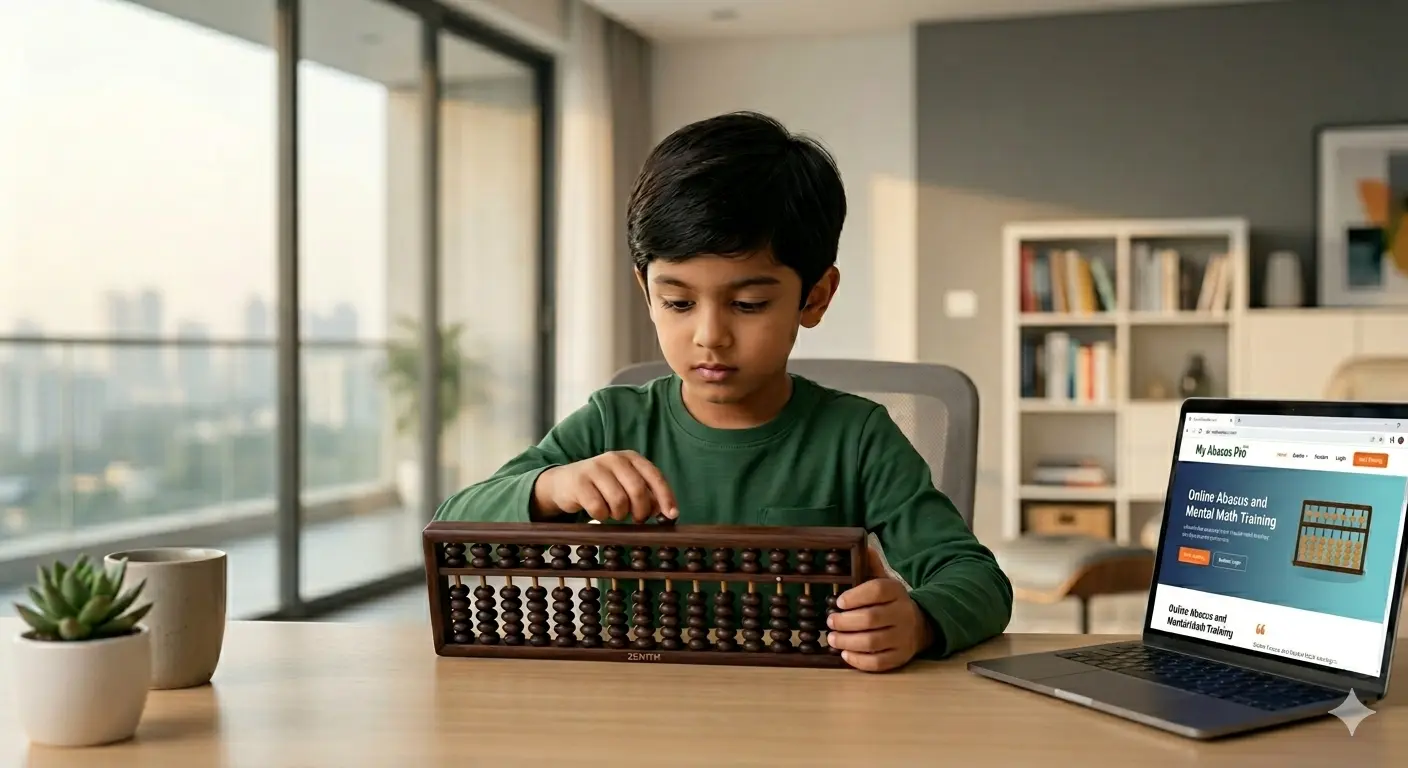
Nearly all great innovations follow a similar cycle: we invent a new technology to solve a problem, only to realize that the most powerful tool we possess is actually the human mind. In 2026, as Artificial Intelligence handles our basic calculations, a surprising trend is emerging. The Soroban—the traditional Japanese abacus—is making a massive comeback.
Why would an ancient tool be relevant in the age of neural networks? The answer lies in cognitive sovereignty. Understanding the future of Soroban requires us to look past the wooden beads and see it for what it truly is: a mental operating system for the 21st century.
The End of "Mental Math Laziness"
For decades, we have outsourced our thinking to calculators and smartphones. While this is convenient, it has led to a documented decline in "number sense"—the ability to intuitively understand scales, proportions, and logic. The future of education is shifting away from what to think and moving toward how to process information at high speeds.
The Soroban provides a tactile, visual interface for the brain. When a child moves a bead, they aren't just doing arithmetic; they are engaging in a sophisticated form of data visualization. As they progress to Anzan (mental calculation), they are effectively running a high-speed simulation in their mind. This is exactly the kind of "Parallel Processing" that modern computer science is built upon.
1. Human-AI Synergy
In the future job market, being "good at math" isn't enough—AI can do that. The real value will be in verification and intuition. A Soroban-trained mind can "see" a mathematical error in a split second before the computer even finishes its task. This "human-in-the-loop" verification is becoming a critical skill in engineering, finance, and data science.
2. Combatting Cognitive Decline
As we rely more on digital assistants, our brains are at risk of losing their sharpness. The future of Soroban training isn't just for children; it is being adopted by professionals and seniors as a form of "Brain Gym." The rapid finger-brain coordination required to master the abacus is one of the few activities proven to stimulate neuroplasticity across all age groups.
3. The Global "Mental Athlete" Movement
We are seeing the rise of competitive mental sports. International abacus competitions are now broadcasted globally, turning students into "Mental Athletes." This shift in perception—from "boring math class" to "elite mental training"—is driving the next wave of platform growth. On My Abacus Pro, we aren't just teaching beads; we are training the athletes of the future.
The Roadmap to Mastery
If you are looking to prepare your child for the decade ahead, the roadmap is simple but requires consistency:
- Phase 1: Tactile Mastery. Learning the physical formulas and bead positions to ground the brain in physical logic.
- Phase 2: Visual Transition. Moving from the physical tool to the "Virtual Abacus" interface.
- Phase 3: Cognitive Integration. Reaching a level where calculations happen subconsciously, freeing the mind for higher-level creative problem solving.
Be Part of the Future
The world is changing fast. Give your child the mental hardware to stay ahead. Start your journey with our modern, digital-first Soroban curriculum today.
Join the Future of Learning →Put these techniques into practice
Want to build the lightning-fast calculation skills mentioned in this article? Our specialized practice tools allow you to drill these specific formulas.
Used by 1,000+ students worldwide to master Soroban techniques.
Written By
Satish Mane (Abacus Trainer)
More in Education
Continue your learning journey with these related articles.
7 Surprising Ways Abacus Training Boosts Your Child's IQ and Focus (Science-Backed)
Discover the scientific link between abacus training and cognitive development. Learn how Soroban mastery enhances memory, focus, and overall IQ.
Beyond the Beads: A Complete Guide to the World’s Most Powerful Mental Tool
From the Roman Empire to the Binary systems of modern computers, discover the hidden history of the abacus and how it remains the gold standard for child brain development in 2026.