Is Your Child Addicted to Screens? How Mental Math Can Be the Perfect Digital Detox
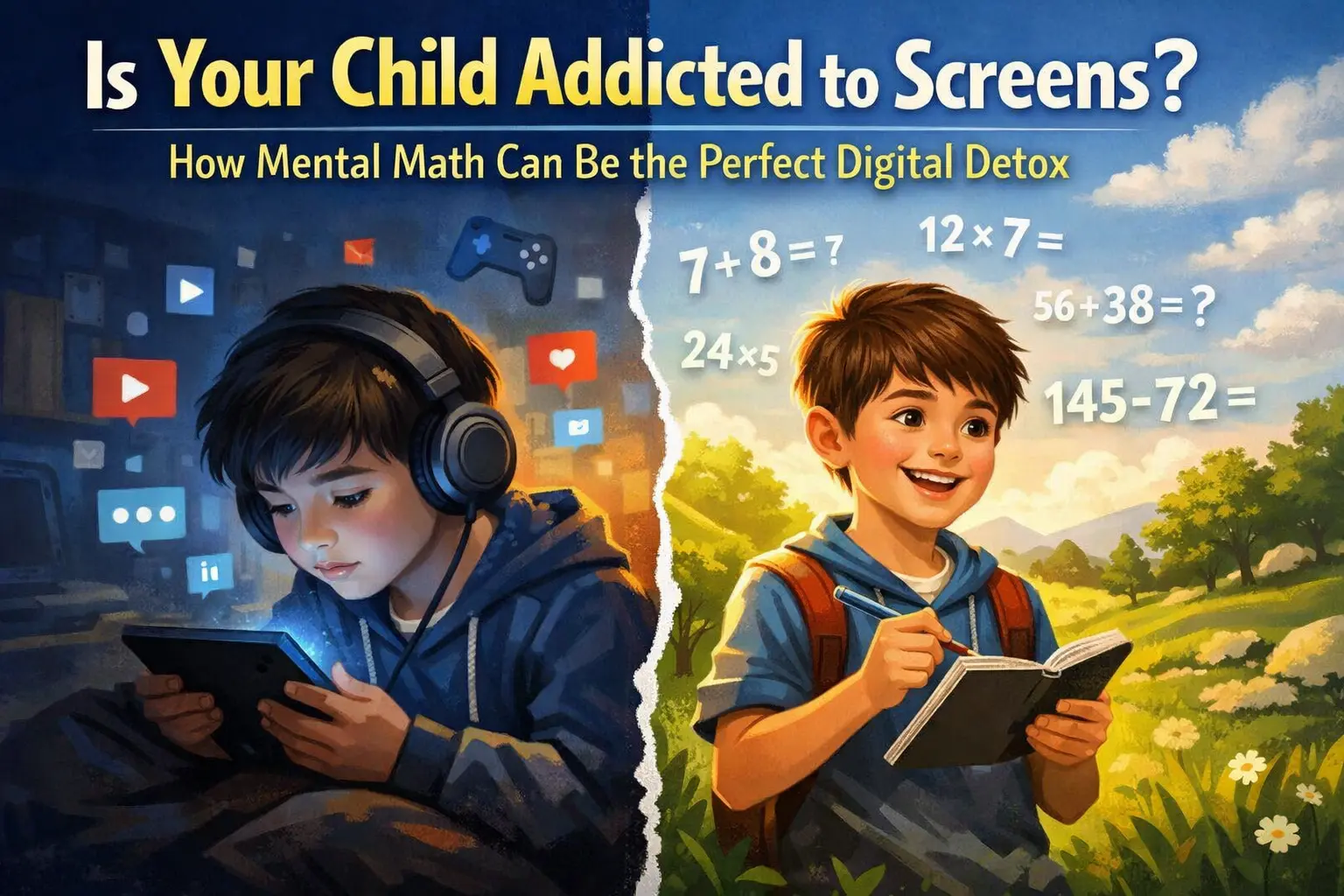
The modern childhood is being redefined by the glow of a high-definition screen. Whether it is educational apps, YouTube shorts, or immersive video games, our children are consuming "micro-content" at an alarming rate. The result is a growing silent crisis: a generation with lightning-fast thumbs but rapidly shrinking attention spans.
As parents, we all feel the underlying guilt. We see the irritability, the "glazed-over" eyes, and the emotional meltdowns that occur the moment the tablet is taken away. But what if the solution wasn't just a forced "digital ban," but rather a more productive form of high-speed stimulation? What if we could give the brain the "hit" it craves while simultaneously rebuilding its ability to focus?
The Science of the Dopamine Trap
To understand why screens are so addictive, we have to look at the brain's reward system. Every "level up," every colorful animation, and every new video releases a burst of dopamine—the chemical responsible for pleasure and motivation. Traditional paper-and-pencil math feels painfully slow and "boring" to a digital-native child because it doesn't provide that instant feedback loop.
When a child spends hours in a passive digital environment, the Prefrontal Cortex—the part of the brain responsible for deep thinking and emotional regulation—essentially goes on vacation. The brain becomes wired for passive consumption rather than active creation. This is where the Abacus changes the game, acting as a bridge between the digital and physical worlds.
1. The High-Speed Feedback Loop
One of the biggest misconceptions is that the Abacus is a "slow" ancient tool. In reality, a trained Abacus student can solve a string of 10 multi-digit additions in under 5 seconds. This speed is critical. It provides the same "instant win" feeling as a video game, but with one major difference: instead of consuming a digital product, the child is mastering a cognitive superpower.
Because the Abacus requires rapid physical movement (or mental bead manipulation), it satisfies the brain's need for fast-paced stimulation. It offers a "gamified" experience without the negative side effects of blue light and mindless scrolling. Your child isn't just "doing math"; they are competing against their own speed records, turning a chore into a high-octane challenge.
2. Replacing "Passive" with "Active" Visualization
On a smartphone screen, the images are provided for you. The brain does zero work to imagine the scene; it simply records what it sees. This leads to "mental laziness." With Mental Math (Anzan), the process is reversed. The child must create a vivid, stable image of the abacus beads in their "mind's eye."
This is the ultimate workout for the brain. To move a mental bead, calculate the result, and keep the image steady requires intense neural coordination. Scientific research suggests that this type of active visualization strengthens the neural pathways between the left and right hemispheres. You are essentially taking the "intensity" of a video game and redirecting it toward building a more powerful, creative, and focused internal architecture.
3. Inducing the "Flow State" Advantage
Have you ever noticed your child so immersed in a game that they don't even hear you calling their name for dinner? Psychologists call this "Flow State"—a period of total immersion where time seems to disappear. While video games exploit this state for entertainment, Abacus training harnesses it for education.
By engaging both the hands and the mind, the Abacus creates a "sensory loop" that naturally induces Flow. When a child enters this state while practicing mental arithmetic, they are practicing the art of Deep Work. This is a skill that will serve them for the rest of their lives, whether they are coding a software program, writing a legal brief, or performing surgery. They are learning how to tune out the world and focus on a single, complex task.
A 3-Step Digital Detox Plan for Your Home
You don't have to throw the iPad out the window to see results. Instead, try this structured approach to balance your child's "Digital Diet":
- The 15-Minute "Entry Fee": Establish a rule that 15 minutes of Abacus practice is the "key" to unlocking 30 minutes of recreational screen time. This teaches delayed gratification.
- Analog Evenings: After 7:00 PM, switch to a physical Abacus tool. The tactile sensation of the wooden beads provides a grounding, sensory experience that helps calm the nervous system before bed.
- Track the "Streak": Use a physical wall calendar or the MyAbacusPro dashboard to track daily practice. The visual satisfaction of a 30-day "streak" provides a healthier dopamine hit than any video game high-score.
Conclusion: Reclaiming the Growing Mind
We cannot remove technology from our children's lives, nor should we. However, we must provide them with the tools to defend their focus. Abacus training isn't just about arithmetic; it is about mental sovereignty. It is about giving your child the ability to sit in a room, without a device, and possess a mind so sharp and imaginative that they are never truly bored.
Ready to reclaim your child's focus?
Join thousands of parents who are using mental math to build stronger, more resilient minds in the digital age. Our 2026 curriculum is specifically designed to combat digital distraction.
Start your 7-day "Focus Challenge" now →Put these techniques into practice
Want to build the lightning-fast calculation skills mentioned in this article? Our specialized practice tools allow you to drill these specific formulas.
Used by 1,000+ students worldwide to master Soroban techniques.
Written By
Satish Mane Abacus Trainer